


Original Author: Dandan Zou
Published: Oct 27, 2025
In fall 2025, the New York State government introduced a cellphone ban in all public schools. The ban prohibits students from using their smartphones from the first bell of the day until the final dismissal bell unless they have a qualified exemption. While educators initially reported to Newsday that they worried about resistance and complicated enforcement, early results from Long Island schools show that the policy is improving student engagement, classroom focus, and social interaction.
The Transition: Smoother than Expected
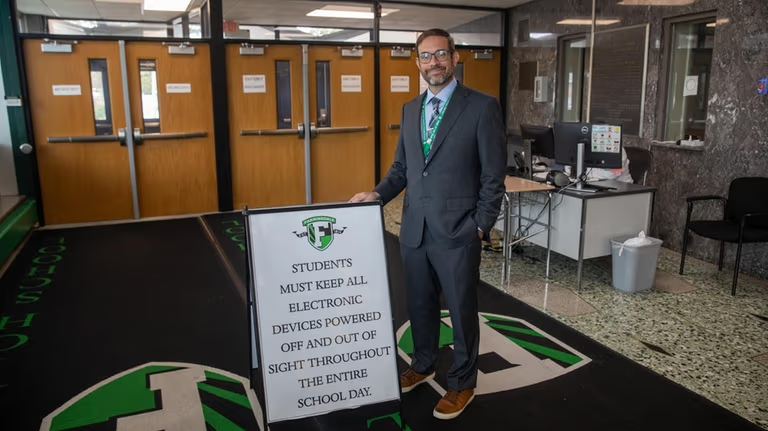
Many Long Island school leaders believed they would spend most of the school day policing phone use. Farmingdale High School Principal Jed Herman admitted he expected constant conflicts over enforcement. Instead, students adjusted quickly. Teachers report that students are more attentive in class, make more eye contact, and fill free periods with conversations rather than screen time.
Superintendents across Long Island share similar experiences. Tim Eagen, president of the Suffolk County School Superintendents Association, said he and his colleagues were pleasantly surprised by how smoothly the transition unfolded. Instead of facing pushback from students or parents, school communities have largely welcomed the change and recognized the benefits of fewer digital distractions.
Engagement Is on the Rise In and Out of the Classroom
A statewide survey by the New York State United Teachers union found significant improvements in classroom behavior. Educators say students are more present, more willing to participate, and more socially positive. Teachers are experiencing fewer interruptions and less time spent redirecting students.
During lunch and free periods, students are also spending more time talking to one another. Many schools have noticed a renewed interest in traditional games like Jenga, cards, and foosball. Several districts have even purchased additional board games to support this shift. The absence of phones has created a more interactive environment where students rely on each other rather than their screens for entertainment.
Logistical Concerns Are Fading
Before the ban took effect, administrators anticipated waves of parents to request exemptions. Yet the number has been far lower than expected. In the Levittown district, only a small group of students out of thousands received approved exemptions.
Confiscations have also been far less frequent than expected. Instead of dozens or hundreds of violations per day, schools typically report only a handful. Levittown administrators purchased multiple safes to store confiscated phones, but have not needed to fill them.
Some districts use pouches that students lock at the start of the day. At East Hampton High School, leaders say the system seemed cumbersome at first, but within days, students learned to unlock their devices efficiently at dismissal. Attempts to open the pouches during the school day have been rare.
How the Ban Is Strengthening Social Connections
One of the strongest outcomes of the Long Island school cellphone ban has been the improvement in student relationships. At Valley Stream Memorial Junior High School, ninth grader Mia shared that she approached another student she noticed sitting alone. She said she likely would have spent that time scrolling on her phone if it had been available. Interactions like this are becoming more common as students fill their free time with conversations rather than apps.
Teachers supervising recess or outdoor activities have noticed similar changes. Students are more active and more engaged with their peers. Games like soccer and volleyball are taking the place of quiet corners filled with students glued to screens. Educators who once struggled to manage phone use now report smoother classroom management and fewer conflicts related to technology.
The ban has also reduced issues such as students using artificial intelligence tools to cheat or posting inappropriate content about classmates during the school day. With fewer digital distractions, administrators spend less time resolving problems that begin online.
What This Means for Long Island Education
The Long Island school cellphone ban is creating a cultural shift across districts. By removing a major source of distraction, schools are seeing more focused learning, better classroom behavior, and stronger peer connections. Students are rediscovering the value of conversation, shared activities, and uninterrupted instructional time. Teachers are finding it easier to maintain productive learning environments. Administrators who initially feared the policy would be difficult now believe it may become a long-term norm.
Read the full article at Newsday.com.
Frequently Asked Questions:
What is New York State’s bell-to-bell cellphone ban?
The bell-to-bell cellphone ban is a statewide policy that prohibits students in public schools from using smartphones during the entire school day. Students must keep phones stored and inaccessible until dismissal unless they have an approved exemption.
Why did New York State implement a cellphone ban in schools?
The state introduced the ban to reduce distractions, improve student focus, and support better mental health. Educators reported growing concerns about social media pressure, constant notifications, and classroom disruptions caused by phones.
Are there any exemptions to the cellphone ban?
Yes. Students may receive exemptions for medical needs, family reasons, or specific educational accommodations. Districts review exemption requests on a case-by-case basis.
Can parents contact their children during the school day?
Schools continue to allow parent communication through the main office. In urgent situations, staff can quickly reach students. Many schools also permit parent pickup of confiscated phones if a student violates the policy more than once.