
Did You Know

$552,584

Lorem ipsum dolor sit amet, consectetur adipiscing elit. Aenean

7,126

Lorem ipsum dolor sit amet, consectetur adipiscing elit. Aenean

Testimonials

[rt-testimonial id="1489" title="Testimonial Slider"]

Coming Together: The Experience of Immigrant Communities on Long Island

Supporting Immigrant Communities on Long Island

Across Nassau and Suffolk counties, immigrant families are part of the fabric of Long Island life. Like all residents, they go to work, take their children to school, visit doctors, and contribute to their neighborhoods. Yet, for many immigrant households, daily routines are accompanied by additional uncertainty. Concerns about their legal status, the status of their loved ones, access to critical resources, and navigating complex legal systems can weigh heavily on individuals and families alike.

Every Day Life Uncertainty 

Immigrant communities on Long Island balance the same responsibilities and activities as everyone else: caring for loved ones, managing work, school, and family obligations, and contributing to the local economy. At the same time, they may encounter unique challenges. Some navigate adversarial immigration court hearings, and many strive to support their families here and abroad. For these neighbors, leaving home each day sometimes carries a sense of uncertainty about what the day might bring. 

The Role of Community

Facing this uncertainty head-on, Long Island communities still rally together to support those in need. Online and in person, we see stories of neighbors organizing around individuals facing sudden legal difficulties, reminding us that local solidarity can provide comfort and temporary relief. Ordinary people on Long Island are showing up for their immigrant neighbors every day—from community organizing to shopping at local immigrant-owned businesses, which can make a meaningful difference for families during uncertain times. Supporting these businesses not only strengthens local economies but also helps sustain families who rely on them. Immigrants fill roles on Long Island across all sectors and all levels, from the restaurant, agricultural, and landscaping industries, to medicine, law, and education. 

Organizations Make A Difference: 

Several nonprofits and advocacy groups on Long Island and beyond work to provide resources, education, and support to immigrant families. Their programs may include legal assistance, English-language instruction, workforce training, and emergency aid. By offering direct services, these organizations aim to reduce the stress that uncertainty can place on individuals and households.

Events such as resource fairs, cultural festivals, and informational workshops highlight the ways community partners collaborate to meet the needs of immigrant populations. For many participants, these gatherings are opportunities to learn about services while also building relationships and connections.

Opportunities for Connection

Discussions about immigration can be polarizing. They raise questions of law, policy, and fairness. Among this dialogue is a space for Long Islanders to come together. The phrase “solo el pueblo salva al pueblo”, translated as “only the people save the people”, is often used in immigrant spaces to describe the power of community support. While policy decisions are shaped at higher levels, local residents still play a part by standing alongside neighbors, offering assistance, and acknowledging contributions. Small actions—hiring local services, supporting immigrant businesses, or volunteering with community organizations—can have a profound impact across Nassau and Suffolk County. 

Immigrant communities will likely remain an important part of Long Island’s future. Their presence is visible in classrooms, small businesses, faith communities, and workplaces of every size. Through uncertainty, opportunities for collaboration and mutual understanding may expand, creating stronger ties between immigrant and non-immigrant residents alike. Initiatives that emphasize inclusion, cultural exchange, and access to essential services can help reinforce the connections that already exist. By focusing on shared goals, such as healthy neighborhoods, strong economies, and thriving families, Long Islanders can build pathways toward resilience and stability for all who call the region home.

FAQS

What challenges can immigrant families face?

Some experience uncertainty related to legal processes, language barriers, or access to resources like housing, healthcare, and transportation.

How do communities support immigrants locally?

Neighbors often rally around families in need, while residents also show support by shopping at immigrant-owned businesses or volunteering with local organizations.

What kinds of organizations provide help?

Nonprofits and advocacy groups may offer legal assistance, language programs, workforce training, and emergency aid to immigrant households.

Learn more about this topic here.
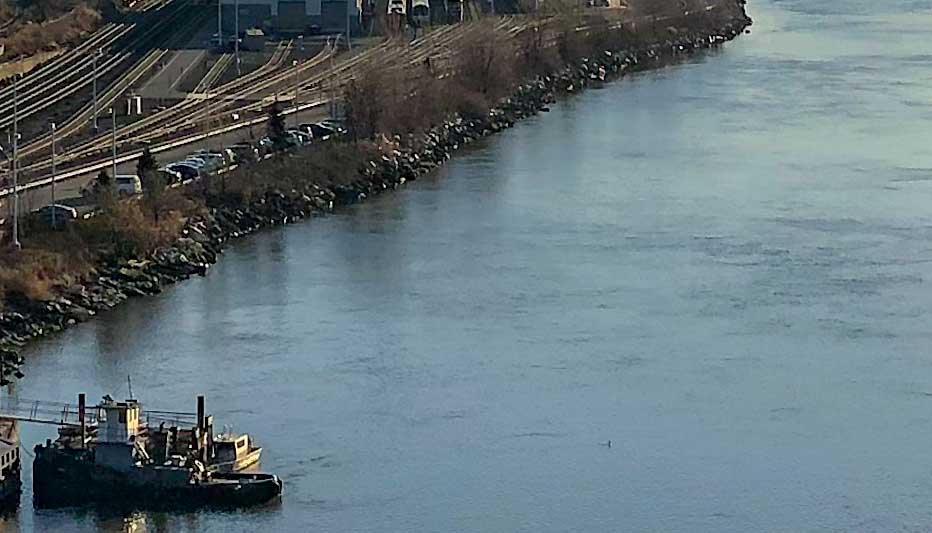
When Progress Meets Uncertainty: Restoring the Bronx River Amid Federal Funding Cuts

The Bronx River has long stood as a reflection of both resilience and neglect in New York City’s most underserved borough. Once burdened by decades of industrial pollution, litter, and abandonment, the river has slowly transformed into a symbol of environmental renewal and community pride.

This progress did not happen on its own. It was driven by the Bronx River Alliance and a coalition of local residents, educators, and public and private partners. Together, they built green infrastructure, created educational programs, and reopened the river as a shared public space. Families paddle along stretches that were once filled with debris. Students now test water quality as part of their science curriculum. Parks and marshes thrive where concrete and waste once dominated.

Yet today, this progress is at risk.

Federal funding cuts, specifically the freezing of Inflation Reduction Act (IRA) grants, have left the Bronx River Alliance in limbo. The organization had been awarded $1.5 million in IRA funds, earmarked to expand workforce development, climate resilience projects, and community engagement initiatives. With that money now indefinitely delayed, the Alliance has been forced to freeze hiring, cancel programming, and rethink its strategy for the future.

The impact is not abstract. It is measured in jobs that won’t be created, programs that won’t reach Bronx youth, and opportunities for environmental justice that will remain unrealized.

The Broader Strain on Nonprofits

The Bronx River Alliance is not alone in this struggle. Across the borough, nonprofits are facing the same double pressure: funding uncertainty on one side and growing community need on the other.

Many of these organizations already operate on thin margins. They serve as a final line of support for families experiencing poverty, housing instability, food insecurity, or violence. When government support falters, the consequences are immediate.

A recent report from Nonprofit New York revealed that 84% of Bronx-based nonprofits rely on government grants to fund essential services. That is significantly higher than the state average. And unlike wealthier areas, the Bronx lacks a strong philanthropic infrastructure to fill the gap. Local foundations are fewer, unrestricted funding is scarce, and city budgets are tightening.

The Osborne Association, a respected nonprofit that provides alternatives to incarceration for youth, has already laid off staff and suspended services due to frozen grants. Safe Horizon, the city’s largest provider of domestic violence services, declined renewal of a critical federal grant because the terms were too burdensome. Hundreds of survivors now face reduced access to shelters and advocacy.

This is the cascading effect of delayed bureaucracy and political gridlock: families left vulnerable, communities destabilized, and frontline staff stretched beyond their limits.

Why the Bronx Feels It the Hardest

The Bronx has long carried the weight of systemic disinvestment. Nearly 30% of its residents live below the poverty line. The borough is predominantly Black and Latino, and inequities extend across education, health outcomes, housing, and employment.

For organizations like the Bronx River Alliance, environmental work is inseparable from this social context. Restoring the river is not just about cleaner water. It is about reclaiming public space, teaching environmental literacy, and creating access to green jobs for residents who have been historically excluded from the environmental movement.

The IRA funds represented more than money; they symbolized a shift in federal priorities toward communities too often overlooked. Their suspension is not just a budgetary delay. It is a setback for environmental justice and a signal to communities that promises of climate equity remain fragile.

Congressman Ritchie Torres summarized the reality bluntly: “When America sneezes, the Bronx gets the flu.” Once again, the Bronx is absorbing the consequences of decisions made far outside its borders.

The Legal and Moral Battle for Funding

In response to the funding freeze, the Bronx River Alliance has joined a coalition of nonprofits in a legal challenge. Their argument is straightforward: Congress approved these grants, organizations were awarded funds, and budgets were built around them. Freezing the disbursement violates both legislative intent and the trust of the organizations that depend on these commitments.

This fight is about more than the Bronx River. It is about restoring predictability in the relationship between government and community organizations. Nonprofits cannot hire staff, design programs, or commit to multi-year strategies if funding is vulnerable to sudden political shifts.

Philanthropy can offer some support, but it cannot replace the scale and consistency of federal investment. The case is as much about civic values as it is about law. What does it say if the very communities most harmed by environmental neglect are the first to lose climate resilience funding?

What Sustained Investment Makes Possible

The story of the Bronx River demonstrates what is possible when funding, community leadership, and vision align. Consider the transformation already achieved:

  • Salt marshes flourishing in Starlight Park, improving biodiversity and stormwater management
  • Community canoe programs that reconnect residents with a river many once avoided
  • Youth training programs that provide entry into the growing green economy
  • Environmental education that gives students hands-on experience in climate science

None of these outcomes happened by accident. They were the result of consistent investment in both people and place. Pulling back now risks erasing hard-won gains and sending a dangerous message that environmental justice is conditional rather than foundational.

A Call to Action

At Praxis, we view stories like this not as isolated case studies but as urgent lessons. They show how local organizations, when resourced and trusted, can deliver national impact. They also reveal how fragile progress becomes when funding is unstable.

For nonprofits across the country, the Bronx River moment is a warning: communications must go beyond visibility. They must build advocacy, sharpen narratives, and hold stakeholders accountable. Telling these stories with precision and purpose can transform delayed funding from a bureaucratic headline into a moral imperative.

The Bronx River deserves more than symbolic recognition. It deserves sustained, strategic investment. So do the families who paddle its waters, the students who study its ecosystems, and the communities who live along its banks.

This is not just about saving a river. It is about honoring a commitment to equity, climate resilience, and justice.

Read the full Newsday article for additional reporting on how frozen federal grants are threatening the Bronx River Alliance’s progress and what it means for climate equity in New York.

FAQ

Why is the Bronx River important for environmental justice?

The Bronx River represents more than clean water; it provides public space, education, green jobs, and community renewal in an underserved borough.

What caused the funding crisis for the Bronx River Alliance?

Federal Inflation Reduction Act grants were frozen, delaying $1.5 million earmarked for workforce development and climate resilience projects.

How are nonprofits in the Bronx affected by these cuts?

Nonprofits face program cancellations, layoffs, and service reductions while community needs continue to grow, deepening inequities.

What legal action is being taken to restore funding?

The Bronx River Alliance and partners are challenging the freeze, arguing that Congress approved these funds and nonprofits built budgets around them.

What progress has been made along the Bronx River so far?

Investments have supported salt marsh restoration, canoe programs, youth green-job training, and climate education.